

G9
___
G9 is the last combustion car designed and build by AAU Racing after 8 combustion cars in the last two decades. The car brought the best competition results in the teams history and was the first to feature a full aerodynamic package.
Story Behind G9
G9 is the last combustion racecar designed and build by AAU Racing. Initial design begain in 2020 and the car was build and finished in the summer of 2022. The car drove more than 50 km in its first test and has clocked over 1000 km to date. It first participated in the FSG2022 competition achieving an amazing result of completing all events. The car was then upgraded with aerodynamics (front and rear wing) for the FSN2023 competition. The car again finished all events and even achieved a 3rd place trophy in the efficiency event, showing the amazing efficiency of the full drivetrain system.
Competition Results
FSG 2022
Dynamic Events
-
Acceleration: 12
-
Skidpad: 13
-
Autocross: 13
-
Endureance: 5
-
Efficiency: 5
Static Events
-
Engineering - EDE: 15
-
Business - BP: 18
-
Cost - C&M: 19
FSN 2023
Dynamic Events
-
Acceleration: 5
-
Skidpad: 6
-
Autocross: 5
-
Endureance: 4
-
Efficiency: 3 🥉
Static Events
-
Engineering - EDE: 10
-
Business - BP: 9
-
Cost - C&M: 7
G9 Technical Specifications
Type: Open Wheeler According to FSG 2022 Regulations
Weight: 227 kg
Wheelbase: 1599 mm
Trackwidth: 1225 mm front & 1171 mm rear
Drivetrain: Rear Wheel Drive, Combustion
Power Transmission: Chain Drive
Motor: PC37 (Honda CBR600RR)
Gears: 5 (Electronic Paddle Shift)
Differential: Drexler M-Diff V1
Electrics: Fartstrup VCU, self-developed BSPD & APPS
Fuel: Gasoline 100 Octane
Acceleration: 0-100 km/h (3.2s)
Max. Power: 75 Hp
Chassis: Tubular Space Frame
Aerodynamics: Front & Rear Wing (230 N Downforce @ 15 m/s)
Suspension: Double-Wishbone front pull-rod, rear push-rod suspension using öhlins TTX25 mk2 dampers and custom springs
Brakes: ISR front and rear calipers, floating steel discs
Rims: OZ Formula Student Magnesium CL 13" wheel
Tires: Hoosier 205/470 R13 Radial

Chassis
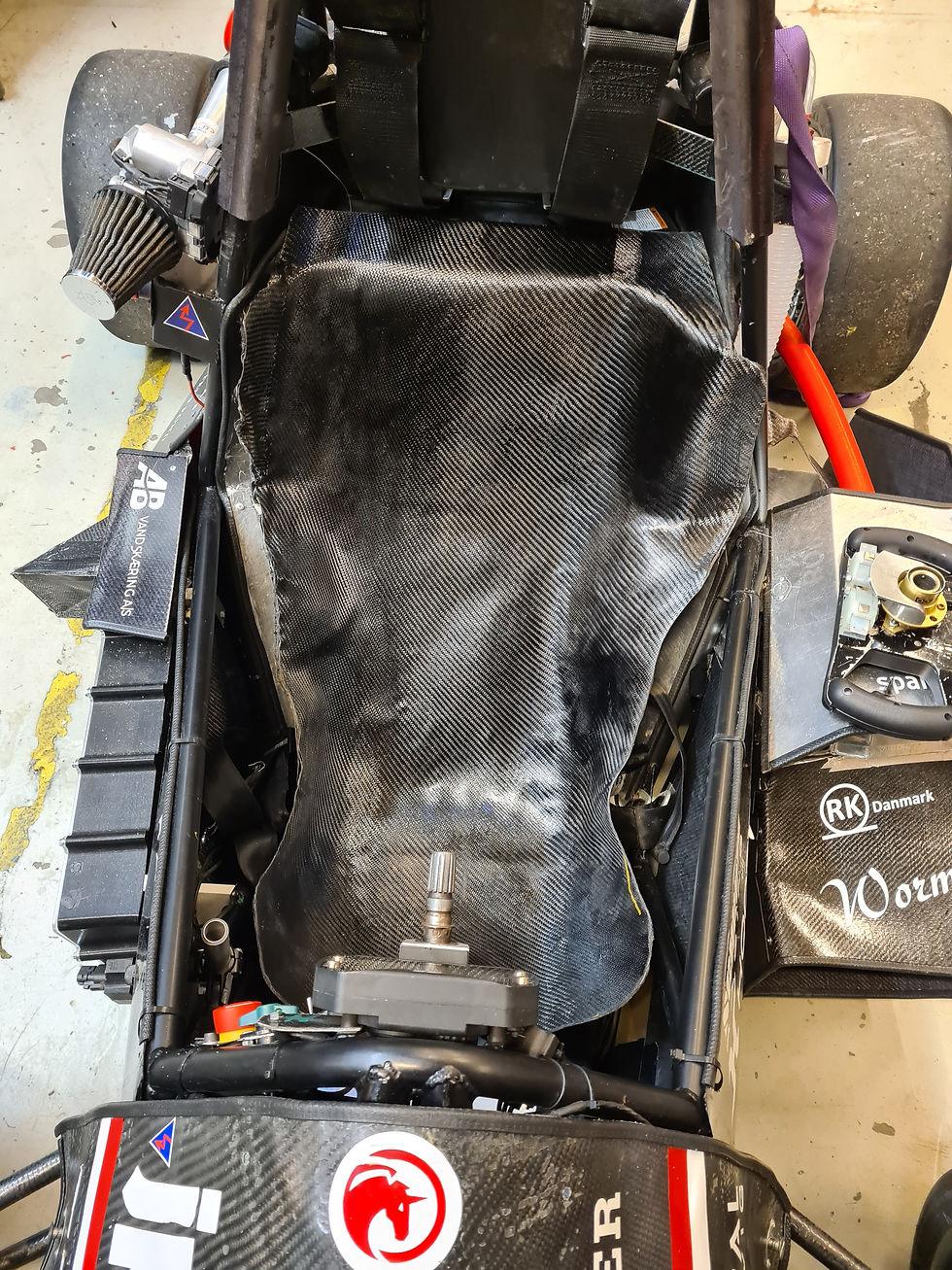
The G9 chassis was an iteration of the G8 chassis. The front roll-hoop was made more pointy to improve driver visability. It also had to adopt a reconfigured front damper configuration compared to G8.
The engine mounting was made tighter than ever, to the point were the chassis was too narrow for the engine to mounted in one piece. Instead the engine had to be disassembled into two pieces and then reassembled inside the chassis.


Suspension
The G9 car uses double-wishbone front pull-rod and rear push-rod suspension. The focus was on optimizing the G8 design by reducing weight. This included switching to aluminium bellcranks and hubs, as well as switching the layout of the front suspension for easier tunning. Additionally, G9 was the first car to switch from 13 "aluminium Keizier rims to 13" magnesium OZ rims, while also switching from high-profile to low-profile tires. All this combined saved over 5 kg in unsprung weight.


Engine - Drivetrain
The G9 car uses a CBR600RR engine was direct injection and custom fuel tank. The focus was on improving the intake by CFD simulation and nylon 3d printing. The effect was additional horsepower unlocked by better flow control. Additionally, a large focus was on reliability which enabled the car to race without major problems at its first competition.


Low-Voltage Electronics
The G9 cars focus for the electronics was on improving packaging and proper wiring. The package features a Fartstrup VCU, custom APPS, BMS, and paddle shift PCB. Everything was packaged into a single electronics box enabling quick access and serviceability.


Aerodynamics
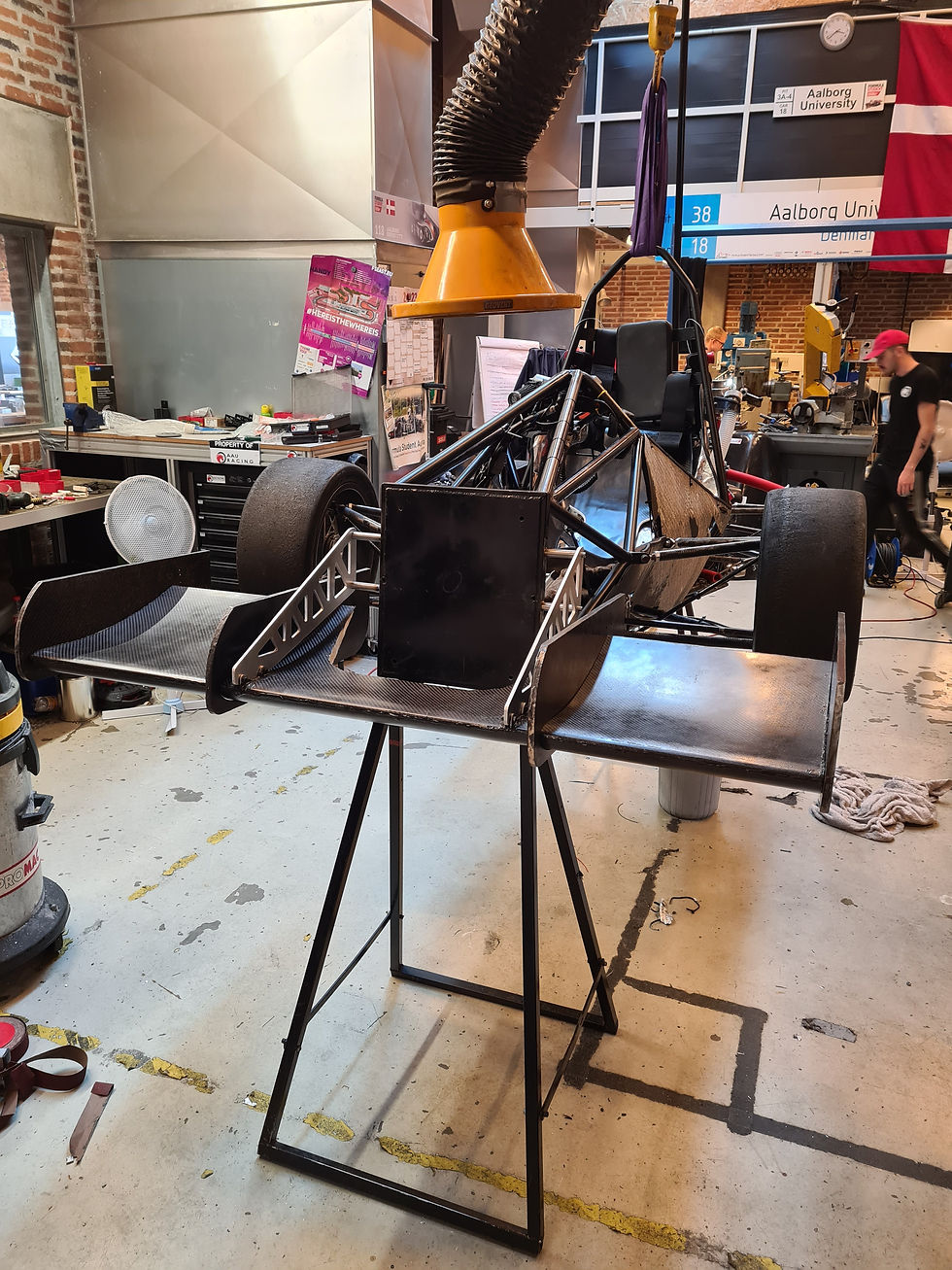
The G9 car was only constructed with bodywork for its first year in 2022. After a very succesfull FSG2022 campaign, the team went to work designing and producing the first front and rear wing in under a year. The focus was on getting experience in production, enabling more complex aerodynamics for future cars and using the experience in designing the G10 car with aerodynamics from the ground up.
While the overall downforce was modest, the improvement in lateral acceleration (cornering) was proved through physical testing of the car.

Media


FOLLOW US
Stay updated on our socials


